


The Oral Continuum: A Comprehensive Historiography of Spoken Word

The evolution of spoken word as a primary medium of expression within the African Diaspora is not a modern phenomenon but rather the continuation of an ancient, complex oral continuum. This tradition functions as a sophisticated living archive where the voice serves as a vessel for history, genealogy, and resistance. From the hereditary griots of the Sahel to the contemporary slam poets of the digital age, the spoken word has remained the blood of Black social and political life, a linguistic and rhythmic force capable of manifesting reality and preserving identity against systemic erasure. This report provides an exhaustive analysis of the historical foundations, technical mechanisms, and pivotal figures who have shaped the spoken word into a global instrument of liberation, specifically examining its roots in West African jeli traditions, its reconfiguration during the era of enslavement, its urbanization during the Harlem Renaissance, and its radicalization through the Black Arts Movement and the modern slam explosion.
The Genetic Code of the Word: West African Jeli Traditions
The contemporary spoken word movement finds its most direct and sophisticated ancestry in the West African griot, or jeli, tradition. Primarily associated with the Mande peoples of the Mali Empire, the jeli is a professional historian, poet, musician, and social mediator. Unlike Western notions of the artist, the jeli holds a hereditary and endogamous status, meaning the role is passed down through specific family lines such as the Kouyaté, Keïta, and Sissoko. This professional specialization ensured that the oral history of the empire remained accurate and relevant across generations.
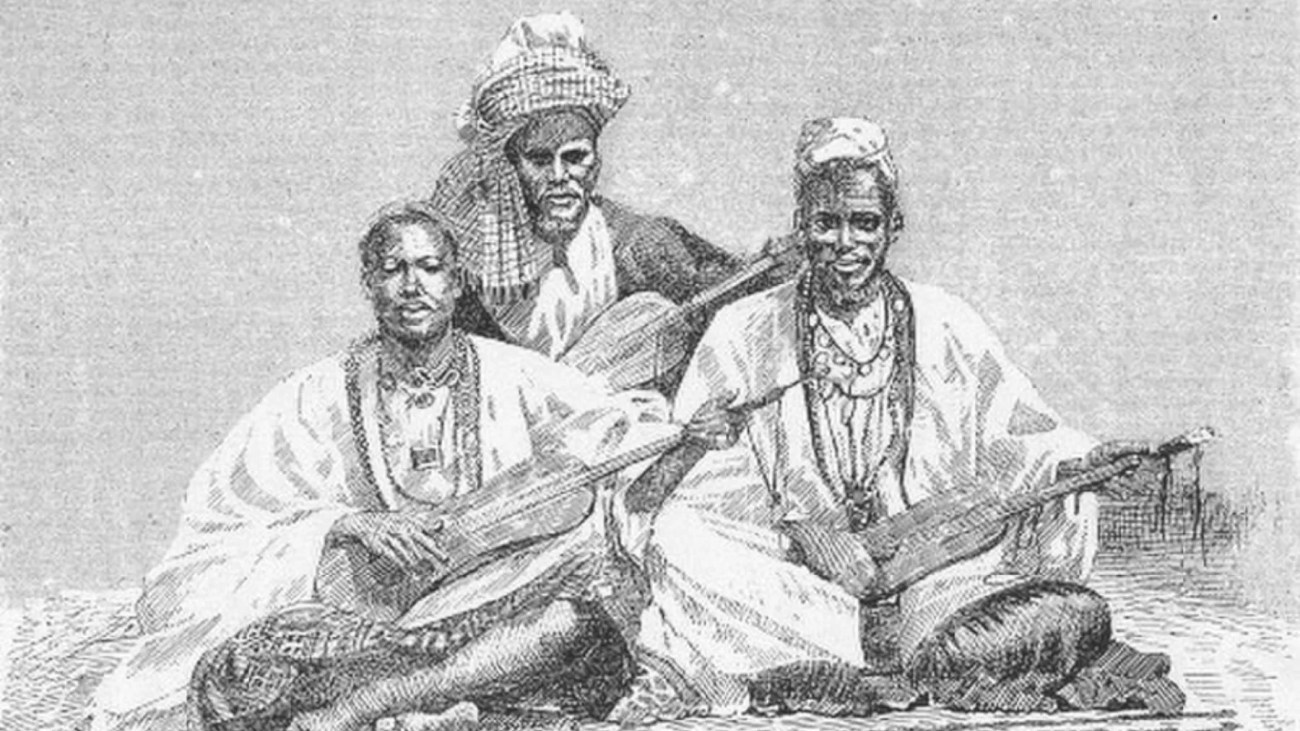
The jeli served as the “king’s right hand,” acting as an advisor to rulers and a mediator in village disputes. Their mastery of speech was believed to possess nyama (spiritual power), capable of recreating history and social relationships through the rhythmic recitation of genealogies and epics. The Epic of Sundiata, which recounts the 13th-century founding of the Mali Empire by Sundiata Keita, remains the foundational text of this tradition.
The epic is characterized by its fluidity; while the core narrative of Sundiata, the lion thief born with paralyzed legs who eventually conquers the Sosso king Soumaoro Kanté, remains consistent, performers adapt specific details to reflect the lives of their contemporary audiences.
This adaptability is a precursor to the improvisational nature of jazz poetry and the freestyle ethos of modern hip-hop.

The musical accompaniment of the jeli is as significant as the word itself. The kora, a 21-string harp-lute, is described as a sacred vessel of history with mythical origins involving djinns (forest genies).
The legend suggests that the first kora was appropriated from a djinn by a hunter-griot named Jali Mady Wuleng. The interplay between the kora’s complex polyrhythms and the performer’s vocal delivery created a sonic landscape where historical facts were felt as much as they were heard.
This established the precedent for the musicality of vocalization that defines Black performance art, from the pulpit to the slam stage.
Alchemy of Survival: Transatlantic Reconfiguration and Enslaved Orality
The Middle Passage and the subsequent period of American enslavement necessitated a radical reconfiguration of African oral traditions.
While enslaved Africans were often stripped of their languages and forbidden from using traditional musical instruments like the drum, which overseers feared as a tool for insurrection, the oral markers of identity proved resilient.

The body and the voice became the primary instruments of rhythmic resistance, leading to the development of field hollers, work songs, and spirituals.
The field holler, a melismatic and improvisational vocalization, was used to communicate across vast plantations and coordinate labor. These hollers featured microtonally flatted notes and blue notes, which would eventually form the basis of the blues and jazz.
Crucially, these vocal forms established a communication network that was unintelligible to white overseers, functioning as a coded language for survival and escape.
Spirituals like “Go Down Moses” were famously utilized by Harriet Tubman to signal her presence on the Underground Railroad.
The Negro Spiritual represented a sophisticated synthesis of European Christian themes and African rhythmic structures, such as call-and-response and syncopation.
These songs provided a sense of ontological security and communal unity in the face of brutalization. Furthermore, the ring shout, a shuffling circular dance accompanied by handclapping and chanting, sustained the African emphasis on the blurring of lines between the individual and the collective, a dynamic that remains central to the Open Room philosophy of contemporary spoken word venues.
The Black sermonic tradition emerged as a critical bridge between these early vocal forms and modern performance poetry. The old-time Negro preacher was an orator of immense technical skill, capable of modulating a voice from a sepulchral whisper to a crashing thunderclap.

James Weldon Johnson compared the range and power of the preacher’s voice to a trombone, noting that the primary secret of this oratory was a progression of rhythmic words. The preacher’s transition from conversational prose to a rhythmic, tonal whoop at the climax of a sermon represents a sophisticated management of time and tempo, designed to achieve communal ecstasy.

This tradition emphasized historical continuity with ancestors and the transformation of the individual through the preaching chord, the intersection of word, sound, and spirit.
Urban Syncopation: The Harlem Renaissance and the Rise of Jazz Poetry
The Great Migration of the early 20th century transported these Southern oral and musical traditions into northern urban centers, particularly Harlem. This era witnessed the formalization of Jazz Poetry, a genre that sought to replicate the improvisational rhythms of jazz and the lament of the blues on the printed page and in public performance.

Langston Hughes, often heralded as the Poet Laureate of Harlem, was the primary architect of this movement, viewing jazz as a uniquely African-American art form that spurned white assimilation in favor of Black creative joy and revolt.
Hughes’s technical innovation lay in his management of time within language. He treated poetry like a musical score, where lines functioned as bars and stanzas as choruses. In his seminal poem The Weary Blues, Hughes utilizes overloaded beats to drag the tempo, mirroring the weary mood of the blues performer.
He incorporated syncopated rhythms and the AAB stanza pattern, where the first two lines repeat to establish a groove before a third line offers resolution, directly mimicking the structure of a blues song.
Hughes’s work was radical not only in its form but in its insistence on portraying the everyday lives of Black Americans without the filter of respectability politics.
His poem “The Negro Speaks of Rivers” utilized the metaphor of the river to symbolize the collective memory and resilience of the Diaspora, asserting a noble and ancient lineage that challenged dehumanizing stereotypes. This established the Dream Deferred, the unfulfilled hope of racial equity, as a central thematic anchor for subsequent generations of spoken word artists.
The Revolutionary Aesthetic: The Black Arts Movement (BAM)
The 1960s and 1970s marked a militant pivot in Black poetry, characterized by the rise of the Black Arts Movement (BAM). Described as the aesthetic and spiritual sister of the Black Power Movement, BAM emphasized self-determination, racial pride, and the use of art as a weapon for liberation.

The movement was catalyzed by the 1965 assassination of Malcolm X, which prompted Amiri Baraka (formerly LeRoi Jones) to move to Harlem and establish the Black Arts Repertory Theatre and School (BARTS).
Baraka’s 1966 poem “Black Art” served as a manifesto, calling for poems that shoot and wrestle, demanding that art move beyond abstract aesthetics to confront systemic oppression directly. The movement rejected Western definitions of high art, opting instead for a Black aesthetic that drew on jazz, vernacular speech, and radical experimentation with sound and grammar.
This period witnessed a prolific expansion of Black publishing houses, such as Chicago’s Third World Press and Detroit’s Broadside Press, which institutionalized the revolutionary voice.
Sonia Sanchez, a cornerstone of BAM, integrated blues and jazz structures into her verse, often employing unconventional spelling (e.g., baddDDD) and rhythmic voice techniques to deconstruct language. Her performance style is described as magnetic and sonically diverse, often utilizing a stutter, a protected remnant of her childhood, to create unique rhythmic textures. In “This Is Not a Small Voice,” Sanchez articulates the Black Genius found in urban centers, navigating the hallways of our schools with a voice that is both a chant and a challenge.
The collective known as The Last Poets further refined the fusion of poetry and percussion, delivering hard-driving urban poetics over African and Afro-Caribbean tempos. Their work facilitated cross-cultural poetics, linking African and Latinx diasporic traditions in Harlem tenements and subways. This era proved that poetry could be popular, politically militant, and formally avant-garde, creating a model for a popular avant-garde that would later define the underground hip-hop movement.
Progenitors of Rap: Gil Scott-Heron and the Social Critics
As the militant energy of BAM transitioned into the late 1970s and early 1980s, Gil Scott-Heron emerged as a vital conduit of social consciousness. Often referred to as the Godfather of Rap, Scott-Heron described himself as a bluesologist, a scientist of the blues’ origins. His work with musician Brian Jackson fused jazz, blues, and soul with lyrics that offered scathing critiques of American democracy and systemic racism.

Scott-Heron’s most iconic track, The Revolution Will Not Be Televised (1970), represents a pinnacle of rhythmic social commentary. By juxtaposing media imagery and commercials with the realities of police violence and urban decay, the poem critiques the superficiality of television and the whitewashing of revolutionary struggle. His delivery, characterized by a rapid-fire, incantatory flow over a jazz-soul beat, directly influenced the sampling aesthetics and production styles of subsequent hip-hop generations, most notably Public Enemy.
The Competitive Arena: Slam Poetry and the Nuyorican Legacy
The 1980s and 1990s witnessed the mainstreaming of performance poetry through the poetry slam, a competitive format invented by Marc Smith in Chicago but perfected in the multicultural crucible of the Nuyorican Poets Cafe in New York City. Founded in 1973 by Miguel Algarín, Miguel Piñero, and others, the Cafe served as an incubator for the Nuyorican movement, focusing on the socioeconomic and political realities of Puerto Rican and Black migrants in the Lower East Side (Loisaida).

The reopening of the Cafe in 1989, spearheaded by Algarín and Bob Holman, coincided with a national explosion in spoken word popularity. The slam format, which involves audience-judged performances on a 0-to-10 scale, democratized poetry, turning it into a pop culture phenomenon and a living, accessible art form. The Nuyorican Poets Cafe became known as the most integrated place on the planet, embracing a diverse array of voices, including LGBTQ+ artists who introduced the Glam Slam, a fusion of poetry and ballroom culture.
The 1990s era of Nuyorican poetry was focused on breaking down barriers: political, social, and racial. It was during this time that figures like Saul Williams and Jessica Care Moore rose to prominence. Williams, a dreadlocked dervish of words, combined the rhythms of the Beat poets with the revolutionary fire of BAM. His victory at the 1996 Nuyorican Grand Slam and his subsequent role in the film Slam brought the incantatory fervor of performance poetry to a global audience. Williams eventually transitioned into industrial punk hop, using staccato guitar riffs that sounded like gunfire to accompany his demands for reparations.
Jessica Care Moore further shattered barriers by becoming the first woman to win Showtime at the Apollo five consecutive times with a poem, a feat that defined the genre and set the standard for her generation. As a publisher through Moore Black Press, she provided a platform for Saul Williams and other poets before they achieved mainstream fame. Her theatrical work, such as the techno-choreopoem Salt City, continues to push the boundaries of the oral tradition into futurist realms.
Contemporary Manifestations: Spoken Word as Ritual and Resistance
In the 21st century, the spoken word has returned to its roots as a revolutionary tool for social justice, specifically within the context of the Black Lives Matter movement and the ongoing struggle against systemic inequality. The digital age has paradoxically revitalized the oral tradition, creating new platforms for performance while maintaining the communal, embodied nature of live delivery. Contemporary poets have inherited the technical sophistication of their predecessors while developing new formal innovations to address the specific traumas and resistances of our moment.
Dionne D. Hunter, performing under the moniker Poetess REDD, exemplifies this synthesis of historical consciousness and contemporary urgency. Her work is born from a lifetime of racist experiences, from childhood stereotypes to the lack of recognition for Martin Luther King Jr. Day in the 1980s South. Her poem “I Can’t Breathe,” which circulated widely following the murder of George Floyd, addresses both the physical brutality of a knee on your neck and the spiritual strangulation of systemic poverty.
This poem carries specific historical resonance, harkening back to the 1984 death of her Uncle Kenny in police custody, a tragedy that, as she notes, was not caught on camera at the time. By shouting the names of victims and centering the voices of the bereaved, Hunter’s work functions as a ritual of communal healing and a demand for institutional accountability. Her performance style, characterized by a powerful vocal projection and deliberate pacing, recalls the sermonic tradition while employing the raw emotional intensity of the slam aesthetic.

The emergence of poets like Amanda Gorman represents another contemporary trajectory, one that has brought spoken word into mainstream institutional spaces. Gorman’s 2021 inaugural poem “The Hill We Climb,” performed at President Biden’s inauguration, demonstrated that performance poetry could command a global audience of millions. While some within the spoken word community have critiqued her work as insufficiently radical, her prominence has undeniably expanded the cultural visibility of the form and created pathways for younger poets to imagine themselves as public intellectuals. This tension between accessibility and radicalism mirrors earlier debates within the tradition, between Hughes’s popular appeal and the avant-garde experiments of BAM.
The digital landscape has fundamentally altered the conditions of contemporary spoken word performance. Platforms like Button Poetry, Def Poetry Jam, and TikTok have created a globalized oral tradition that remains firmly anchored in the Black rhetorical continuum while reaching audiences that would never attend a live slam. This democratization has also enabled the emergence of poets from geographic margins, rural areas, the Global South, diaspora communities, who might previously have lacked access to the institutional gatekeepers of the slam circuit. Poets like Rudy Francisco and Sarah Kay have built substantial followings through digital platforms, translating the intimacy of live performance into the mediated space of video.
Simultaneously, the live slam scene has continued to evolve, with venues like the Nuyorican Poets Cafe remaining vital incubators for new voices while also hosting increasingly diverse aesthetic experiments. The rise of intersectional spoken word, work that centers LGBTQ+ experiences, disability justice, immigrant narratives, and gender-nonconforming identities, has expanded the thematic and formal possibilities of the tradition. Poets like Kai Davis and Javon Johnson have used the slam stage to interrogate the relationship between Blackness and queerness, creating work that refuses the false choice between racial and sexual liberation.
The relationship between spoken word and hip-hop has also deepened in the contemporary moment. While earlier sections traced hip-hop’s genealogy back through the Black Arts Movement and Gil Scott-Heron, contemporary poets increasingly collaborate with hip-hop producers and musicians, creating hybrid forms that blur the boundaries between rap and poetry. This reflects a return to the jeli model, where the word and the music are inseparable, where the voice is always already musical. Artists like Kendrick Lamar, while primarily identified as a rapper, employ poetic techniques and thematic complexity that situate his work within the spoken word continuum, demonstrating that the distinction between “poetry” and “rap” is increasingly untenable.
Modern poets continue to use experimental forms to measure unmanageable trauma, turning visceral reactions to death into what Sonia Sanchez called “a house of blue mourning” that eventually calls for unity and change. The work of poets responding to police violence, environmental catastrophe, and pandemic loss demonstrates that the spoken word remains not a small voice, but a large voice coming out of the cities, initiated by Black Genius, and dedicated to the enduring dream of liberation. In this sense, the contemporary moment represents not a departure from the tradition but a deepening of its core commitment: to speak the unspeakable, to make the invisible visible, and to transform individual suffering into collective resistance.
Synthesis and Conclusion: The Enduring Power of the Oral Continuum
The history of spoken word within Black heritage is a testament to the power of the oral over the written, the communal over the individual, and the rhythmic over the static. From the jeli of the Sahel who preserved the Manden Charter to the poets of the Black Arts Movement who used verse as a weapon of nation-building, the tradition has consistently functioned as a mechanism for survival and self-assertion. The evolution of the form, through spirituals, jazz poetry, and the competitive slam, demonstrates a remarkable ability to adapt to new technologies and social conditions while maintaining its core aesthetic markers: syncopation, call-and-response, and the felt timing of the Black experience.
The figures analyzed in this report, Amiri Baraka, Gil Scott-Heron, Sonia Sanchez, Saul Williams, and Jessica Care Moore, represent the vanguard of this tradition, bridging the gap between ancient ritual and modern activism. Their work ensures that the oral tradition is not a relic of the past but a vibrant, evolving force capable of addressing race, identity, and justice in a globalized world. Ultimately, the spoken word serves as the blood of the Diaspora, a vital force that allows marginalized communities to write themselves into history and memory for the sake of survival and the full expression of humanity. In the face of ongoing systemic challenges, the spoken word remains a primary site of resistance, a tom-tom of revolt that continues to beat in the soul of the revolutionary artist.
As we move deeper into an era of artificial intelligence, algorithmic curation, and increasingly mediated human connection, the oral tradition faces both unprecedented opportunities and existential threats. The question before us is not whether the spoken word will survive, history suggests it will, but rather how it will transform. Will emerging technologies like deepfakes and AI-generated poetry threaten the authenticity and embodied presence that have always defined the form? Or will poets harness these tools to create new hybrid aesthetics that honor the tradition while pushing toward unimaginable futures? The answer likely lies in the hands of the next generation of poets, those who will inherit both the revolutionary legacy of their predecessors and the responsibility to imagine liberation in forms we cannot yet conceive. What remains certain is that as long as there are bodies that have been marginalized, voices that have been silenced, and dreams that have been deferred, the oral continuum will persist; adapting, evolving, and speaking truth to power in whatever medium the moment demands.
Like what you’re reading? Support Three Times.
Three Times is independent and reader-supported. Your contribution helps keep the work going.

CONVERSATION 0 COMMENTS
Join the conversation. No account required.